Ubiquity Press
Simplifying the conference planning process.
Team: Sona Dolasia, Mattin Delavar, Ellen Nguyen, Shirley Sun, Warren Lai (mentor)
Role: User Research Lead
Timeline: January - May 2019
Deliverables: Figma Prototypes, User Research Report
Ubiquity Press
Simplifying the conference planning process.
Team: Sona Dolasia, Mattin Delavar, Ellen Nguyen, Shirley Sun, Warren Lai (mentor)
Role: User Research Lead
Timeline: January - May 2019
Deliverables: Figma Prototypes, User Research Report
context
As a product design consultant for Berkeley Innovation, my team worked with British academic publisher, Ubiquity Press. The company was devloping a conference planning platform to help academic conferences manage submitted abstract/papers.
The goals for this project were to: conduct user research, redesign/refine existing features, and add functionalities to complete the product.
research
We conducted three different research methods to motivate our designs:
Interviews
Spoke with 9 conference organizers and attendees to learn more about their needs.
Surveys
Wrote and sent surveys to 14 conference organizers and attendees, to gain better insight into current practices and painpoints.
Secondary Research
Researched 11 exisiting platforms. Noted pros, cons, usability, and other features.
insights
Streamlining
Information needed to create a conference is presented in an unorganized and lengthy way.
Customization
Organizers want to be able to customize their conference site to include various features and implement their branding.
Scheduling
Organizers need a simple and efficient way to schedule events at conferences. Attendees want to personalize their own schedule by interest.
Highlight Details
Key information about conferences is often hard to find. Attendees want to easily be able to see information about location, dates, deadlines, etc. quickly.
Mulifunctionality
Organizers want a platform that supports all aspects of running a conference (submissions, website, ticketing, etc).
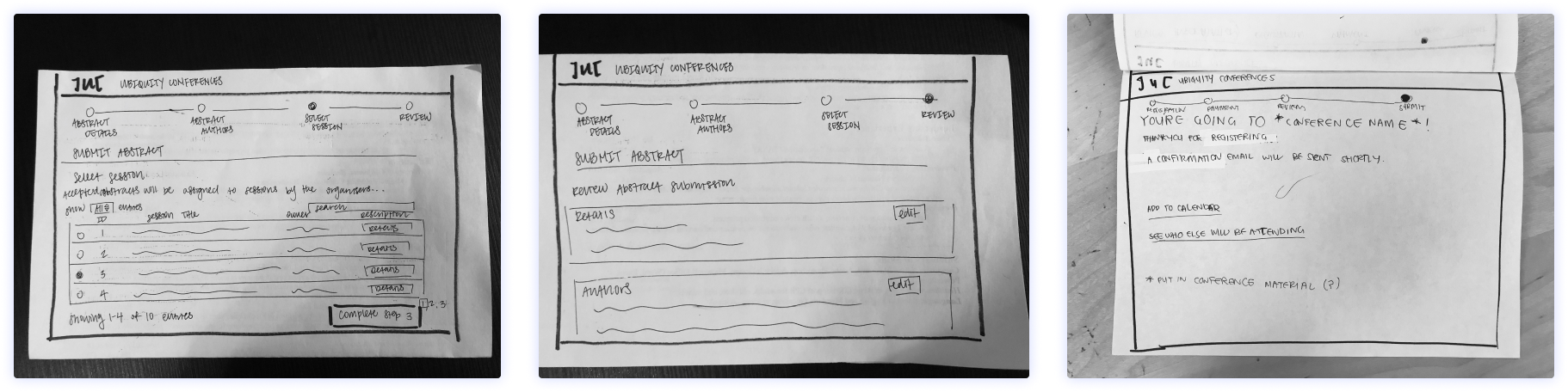
low fidelity
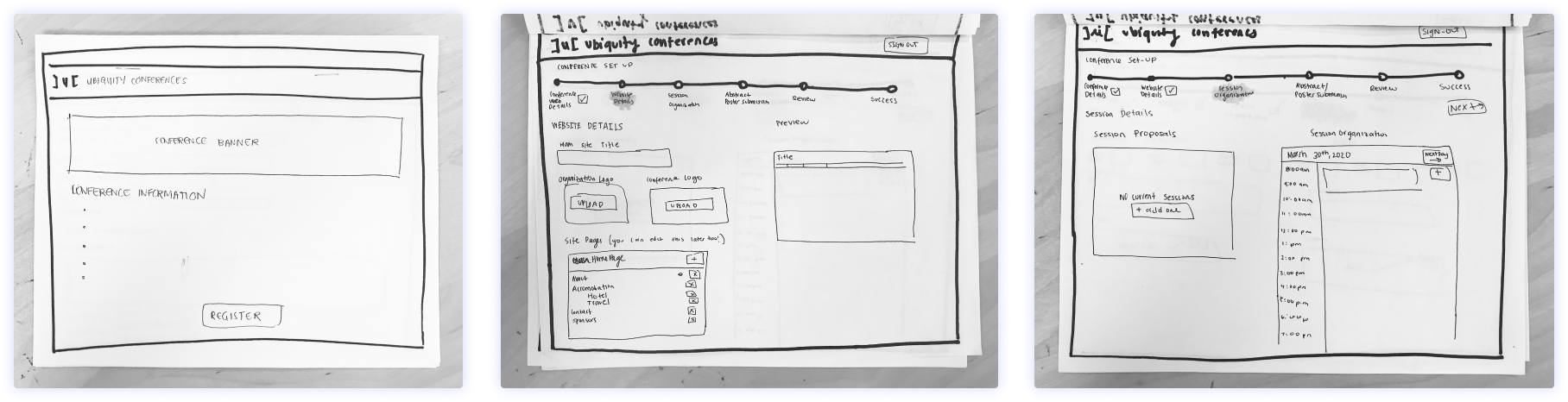
mid fidelity
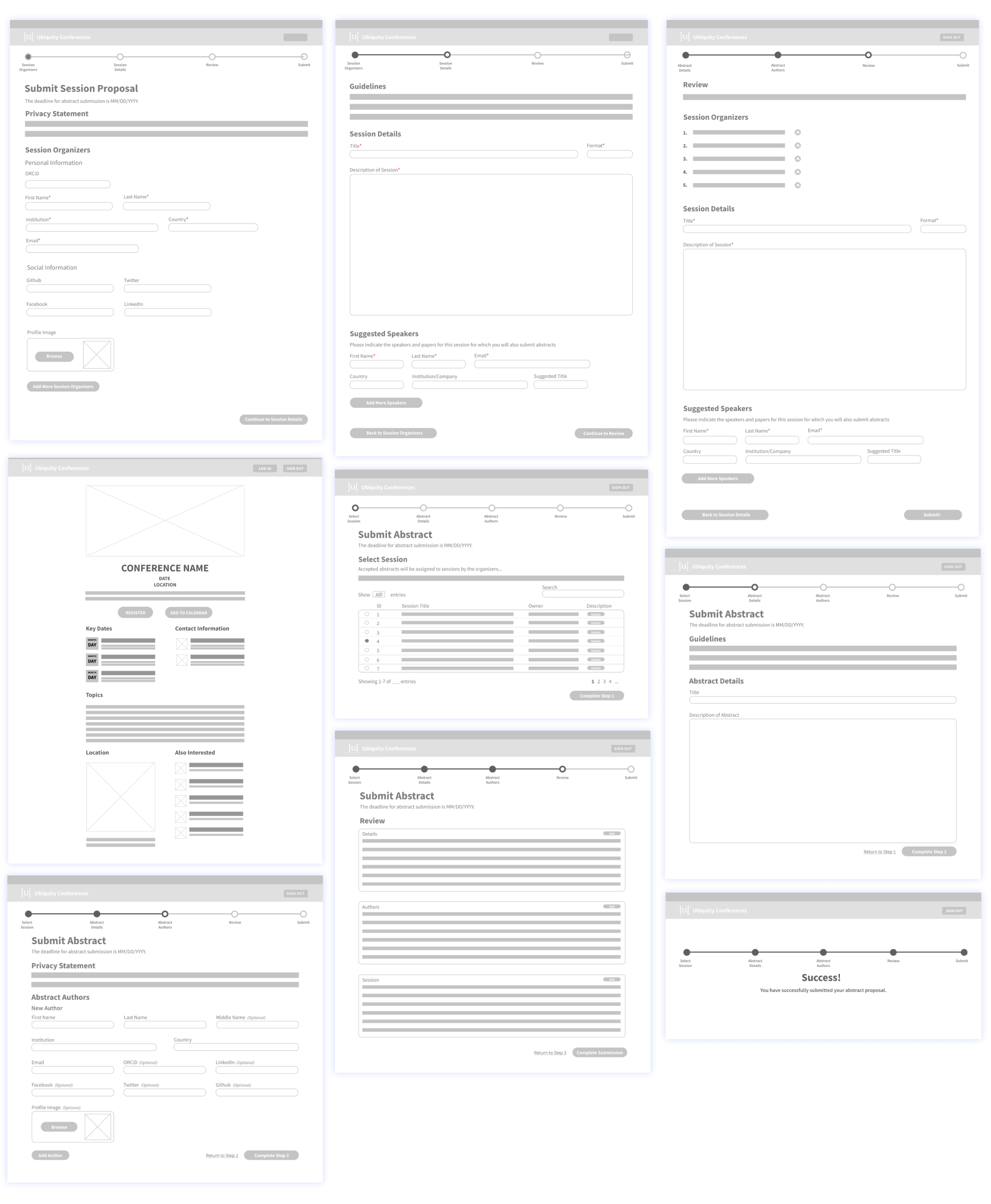
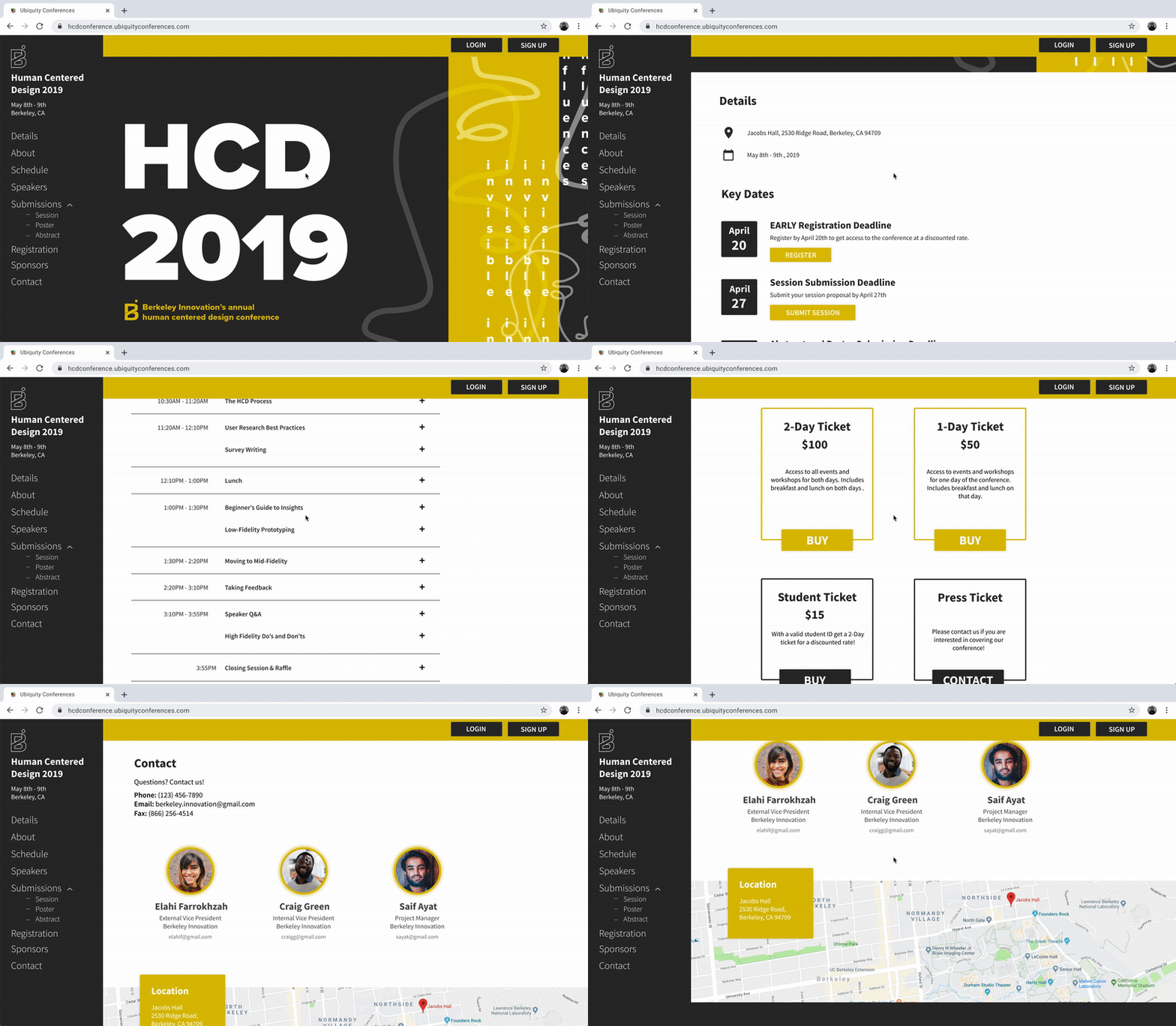
high fidelity

reflection
Working with Berkeley Innovation as a consultant for the second time, I was able to apply everything I learned in my first semester and grow as a designer. In a team of entirely new consultants, I also felt like I got to share a bit of the Project Mentor role. I led the first sprint to help my team understand how our design process works.
The biggest challenge we faced was the scope of the project. It was ambitious, and it wasn't until we began creating user flows that we realized just how many screens we needed to develop. Given this, I wish we had more time to iterate on the screens and do more user testing.
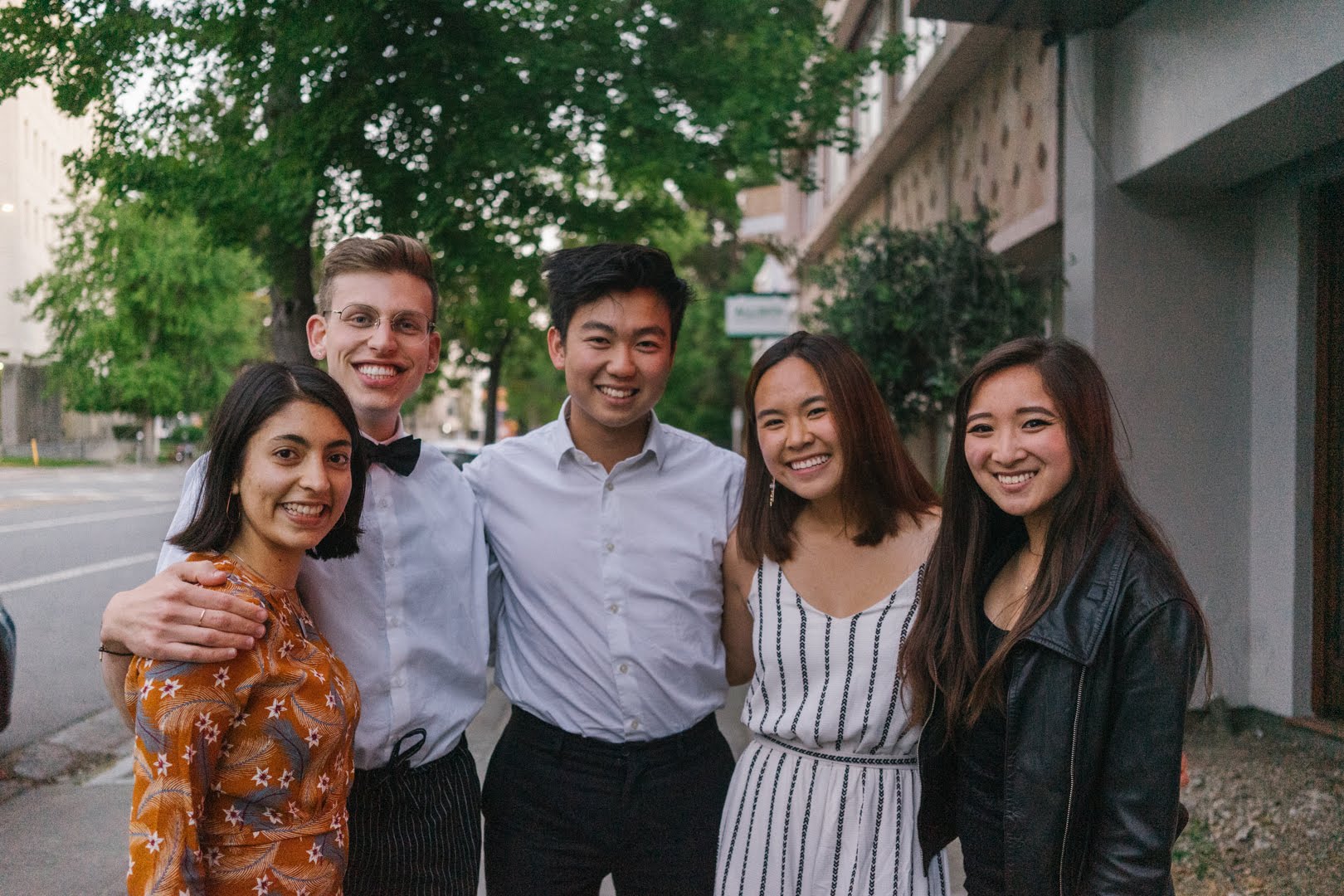
All dressed up at the Berkeley Innovation banquet!